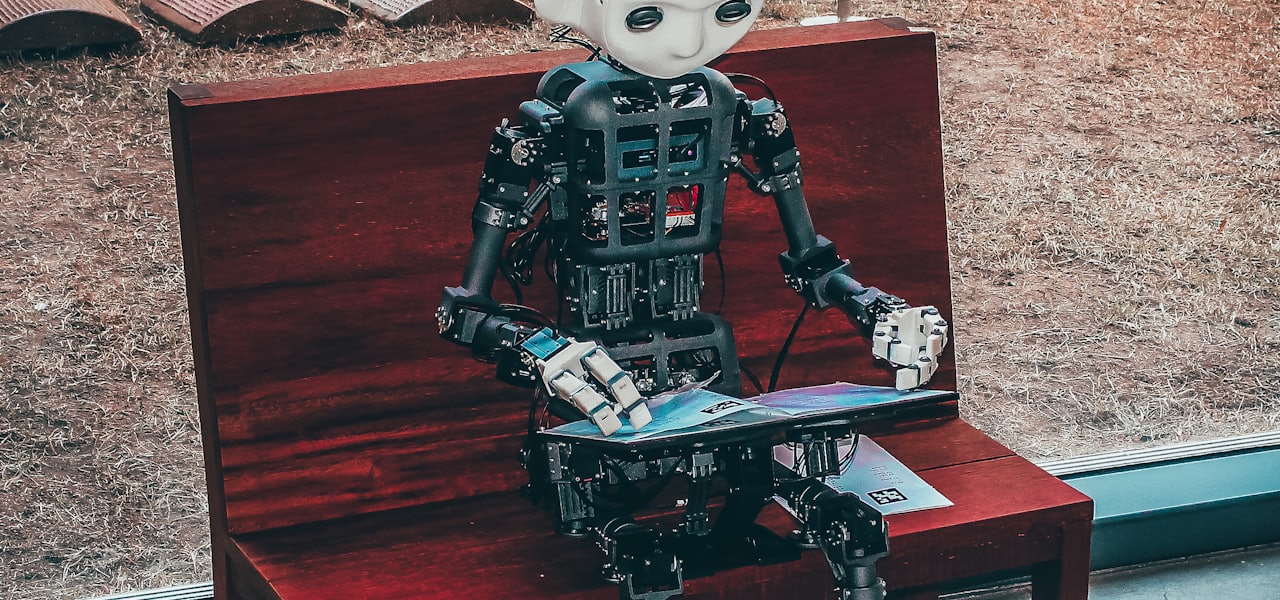
Rule-based machine translation (RBMT) is a classical approach of machine translation systems based on linguistic information about source and target languages. Such information is retrieved from (unilingual, bilingual or multilingual) dictionaries and grammars covering the main semantic, morphological, and syntactic regularities of each language. Having input sentences, an RBMT system generates output sentences on the basis of analysis of both the source and the target languages involved. RBMT has been progressively superseded by more efficient methods, particularly neural machine translation. == History == The first RBMT systems were developed in the early 1970s. The most important steps of this evolution were the emergence of the following RBMT systems: Systran Japanese MT systems Today, other common RBMT systems include: Apertium GramTrans == Types of RBMT == There are three different types of rule-based machine translation systems: Direct Systems (Dictionary Based Machine Translation) map input to output with basic rules. Transfer RBMT Systems (Transfer Based Machine Translation) employ morphological and syntactical analysis. Interlingual RBMT Systems (Interlingua) use an abstract meaning. RBMT systems can also be characterized as the systems opposite to Example-based Systems of Machine Translation (Example Based Machine Translation), whereas Hybrid Machine Translations Systems make use of many principles derived from RBMT. == Basic principles == The main approach of RBMT systems is based on linking the structure of the given input sentence with the structure of the demanded output sentence, necessarily preserving their unique meaning. The following example can illustrate the general frame of RBMT: A girl eats an apple. Source Language = English; Demanded Target Language = German Minimally, to get a German translation of this English sentence one needs: A dictionary that will map each English word to an appropriate German word. Rules representing regular English sentence structure. Rules representing regular German sentence structure. And finally, we need rules according to which one can relate these two structures together. Accordingly, we can state the following stages of translation: 1st: getting basic part-of-speech information of each source word: a = indef.article; girl = noun; eats = verb; an = indef.article; apple = noun 2nd: getting syntactic information about the verb "to eat": NP-eat-NP; here: eat – Present Simple, 3rd Person Singular, Active Voice 3rd: parsing the source sentence: (NP an apple) = the object of eat Often only partial parsing is sufficient to get to the syntactic structure of the source sentence and to map it onto the structure of the target sentence. 4th: translate English words into German a (category = indef.article) => ein (category = indef.article) girl (category = noun) => Mädchen (category = noun) eat (category = verb) => essen (category = verb) an (category = indef. article) => ein (category = indef.article) apple (category = noun) => Apfel (category = noun) 5th: Mapping dictionary entries into appropriate inflected forms (final generation): A girl eats an apple. => Ein Mädchen isst einen Apfel. == Ontologies == An ontology is a formal representation of knowledge that includes the concepts (such as objects, processes etc.) in a domain and some relations between them. If the stored information is of linguistic nature, one can speak of a lexicon. In NLP, ontologies can be used as a source of knowledge for machine translation systems. With access to a large knowledge base, rule-based systems can be enabled to resolve many (especially lexical) ambiguities on their own. In the following classic examples, as humans, we are able to interpret the prepositional phrase according to the context because we use our world knowledge, stored in our lexicons:I saw a man/star/molecule with a microscope/telescope/binoculars.Since the syntax does not change, a traditional rule-based machine translation system may not be able to differentiate between the meanings. With a large enough ontology as a source of knowledge however, the possible interpretations of ambiguous words in a specific context can be reduced. === Building ontologies === The ontology generated for the PANGLOSS knowledge-based machine translation system in 1993 may serve as an example of how an ontology for NLP purposes can be compiled: A large-scale ontology is necessary to help parsing in the active modules of the machine translation system. In the PANGLOSS example, about 50,000 nodes were intended to be subsumed under the smaller, manually-built upper (abstract) region of the ontology. Because of its size, it had to be created automatically. The goal was to merge the two resources LDOCE online and WordNet to combine the benefits of both: concise definitions from Longman, and semantic relations allowing for semi-automatic taxonomization to the ontology from WordNet. A definition match algorithm was created to automatically merge the correct meanings of ambiguous words between the two online resources, based on the words that the definitions of those meanings have in common in LDOCE and WordNet. Using a similarity matrix, the algorithm delivered matches between meanings including a confidence factor. This algorithm alone, however, did not match all meanings correctly on its own. A second hierarchy match algorithm was therefore created which uses the taxonomic hierarchies found in WordNet (deep hierarchies) and partially in LDOCE (flat hierarchies). This works by first matching unambiguous meanings, then limiting the search space to only the respective ancestors and descendants of those matched meanings. Thus, the algorithm matched locally unambiguous meanings (for instance, while the word seal as such is ambiguous, there is only one meaning of seal in the animal subhierarchy). Both algorithms complemented each other and helped constructing a large-scale ontology for the machine translation system. The WordNet hierarchies, coupled with the matching definitions of LDOCE, were subordinated to the ontology's upper region. As a result, the PANGLOSS MT system was able to make use of this knowledge base, mainly in its generation element. == Components == The RBMT system contains: a SL morphological analyser - analyses a source language word and provides the morphological information; a SL parser - is a syntax analyser which analyses source language sentences; a translator - used to translate a source language word into the target language; a TL morphological generator - works as a generator of appropriate target language words for the given grammatica information; a TL parser - works as a composer of suitable target language sentences; Several dictionaries - more specifically a minimum of three dictionaries: a SL dictionary - needed by the source language morphological analyser for morphological analysis, a bilingual dictionary - used by the translator to translate source language words into target language words, a TL dictionary - needed by the target language morphological generator to generate target language words. The RBMT system makes use of the following: a Source Grammar for the input language which builds syntactic constructions from input sentences; a Source Lexicon which captures all of the allowable vocabulary in the domain; Source Mapping Rules which indicate how syntactic heads and grammatical functions in the source language are mapped onto domain concepts and semantic roles in the interlingua; a Domain Model/Ontology which defines the classes of domain concepts and restricts the fillers of semantic roles for each class; Target Mapping Rules which indicate how domain concepts and semantic roles in the interlingua are mapped onto syntactic heads and grammatical functions in the target language; a Target Lexicon which contains appropriate target lexemes for each domain concept; a Target Grammar for the target language which realizes target syntactic constructions as linearized output sentences. == Advantages == No bilingual texts are required. This makes it possible to create translation systems for languages that have no texts in common, or even no digitized data whatsoever. Domain independent. Rules are usually written in a domain independent manner, so the vast majority of rules will "just work" in every domain, and only a few specific cases per domain may need rules written for them. No quality ceiling. Every error can be corrected with a targeted rule, even if the trigger case is extremely rare. This is in contrast to statistical systems where infrequent forms will be washed away by default. Total control. Because all rules are hand-written, you can easily debug a rule-based system to see exactly where a given error enters the system, and why. Reusability. Because RBMT systems are generally built from a strong source language analysis that is fed to a transfer step and target language generator, the source language analysis and targe
Plotting algorithms for the Mandelbrot set
There are many programs and algorithms used to plot the Mandelbrot set and other fractals, some of which are described in fractal-generating software. These programs use a variety of algorithms to determine the color of individual pixels efficiently. == Escape time algorithm == The simplest algorithm for generating a representation of the Mandelbrot set is known as the "escape time" algorithm. A repeating calculation is performed for each x, y point in the plot area and based on the behavior of that calculation, a color is chosen for that pixel. === Unoptimized naïve escape time algorithm === In both the unoptimized and optimized escape time algorithms, the x and y locations of each point are used as starting values in a repeating, or iterating calculation (described in detail below). The result of each iteration is used as the starting values for the next. The values are checked during each iteration to see whether they have reached a critical "escape" condition, or "bailout". If that condition is reached, the calculation is stopped, the pixel is drawn, and the next x, y point is examined. For some starting values, escape occurs quickly, after only a small number of iterations. For starting values very close to but not in the set, it may take hundreds or thousands of iterations to escape. For values within the Mandelbrot set, escape will never occur. The programmer or user must choose how many iterations–or how much "depth"–they wish to examine. The higher the maximal number of iterations, the more detail and subtlety emerge in the final image, but the longer time it will take to calculate the fractal image. Escape conditions can be simple or complex. Because no complex number with a real or imaginary part greater than 2 can be part of the set, a common bailout is to escape when either coefficient exceeds 2. A more computationally complex method that detects escapes sooner, is to compute distance from the origin using the Pythagorean theorem, i.e., to determine the absolute value, or modulus, of the complex number. If this value exceeds 2, or equivalently, when the sum of the squares of the real and imaginary parts exceed 4, the point has reached escape. More computationally intensive rendering variations include the Buddhabrot method, which finds escaping points and plots their iterated coordinates. The color of each point represents how quickly the values reached the escape point. Often black is used to show values that fail to escape before the iteration limit, and gradually brighter colors are used for points that escape. This gives a visual representation of how many cycles were required before reaching the escape condition. To render such an image, the region of the complex plane we are considering is subdivided into a certain number of pixels. To color any such pixel, let c {\displaystyle c} be the midpoint of that pixel. We now iterate the critical point 0 under P c {\displaystyle P_{c}} , checking at each step whether the orbit point has modulus larger than 2. When this is the case, we know that c {\displaystyle c} does not belong to the Mandelbrot set, and we color our pixel according to the number of iterations used to find out. Otherwise, we keep iterating up to a fixed number of steps, after which we decide that our parameter is "probably" in the Mandelbrot set, or at least very close to it, and color the pixel black. In pseudocode, this algorithm would look as follows. The algorithm does not use complex numbers and manually simulates complex-number operations using two real numbers, for those who do not have a complex data type. The program may be simplified if the programming language includes complex-data-type operations. for each pixel (Px, Py) on the screen do x0 := scaled x coordinate of pixel (scaled to lie in the Mandelbrot X scale (-2.00, 0.47)) y0 := scaled y coordinate of pixel (scaled to lie in the Mandelbrot Y scale (-1.12, 1.12)) x := 0.0 y := 0.0 iteration := 0 max_iteration := 1000 while (xx + yy ≤ 22 AND iteration < max_iteration) do xtemp := xx - yy + x0 y := 2xy + y0 x := xtemp iteration := iteration + 1 color := palette[iteration] plot(Px, Py, color) Here, relating the pseudocode to c {\displaystyle c} , z {\displaystyle z} and P c {\displaystyle P_{c}} : z = x + i y {\displaystyle z=x+iy\ } z 2 = x 2 + 2 i x y {\displaystyle z^{2}=x^{2}+2ixy} - y 2 {\displaystyle y^{2}\ } c = x 0 + i y 0 {\displaystyle c=x_{0}+iy_{0}\ } and so, as can be seen in the pseudocode in the computation of x and y: x = R e ( z 2 + c ) = x 2 − y 2 + x 0 {\displaystyle x=\mathop {\mathrm {Re} } (z^{2}+c)=x^{2}-y^{2}+x_{0}} and y = I m ( z 2 + c ) = 2 x y + y 0 . {\displaystyle y=\mathop {\mathrm {Im} } (z^{2}+c)=2xy+y_{0}.\ } To get colorful images of the set, the assignment of a color to each value of the number of executed iterations can be made using one of a variety of functions (linear, exponential, etc.). One practical way, without slowing down calculations, is to use the number of executed iterations as an entry to a palette initialized at startup. If the color table has, for instance, 500 entries, then the color selection is n mod 500, where n is the number of iterations. === Optimized escape time algorithms === The code in the previous section uses an unoptimized inner while loop for clarity. In the unoptimized version, one must perform five multiplications per iteration. To reduce the number of multiplications the following code for the inner while loop may be used instead: x2:= 0 y2:= 0 w:= 0 while (x2 + y2 ≤ 4 and iteration < max_iteration) do x:= x2 - y2 + x0 y:= w - x2 - y2 + y0 x2:= x x y2:= y y w:= (x + y) (x + y) iteration:= iteration + 1 The above code works via some algebraic simplification of the complex multiplication: ( i y + x ) 2 = − y 2 + 2 i y x + x 2 = x 2 − y 2 + 2 i y x {\displaystyle {\begin{aligned}(iy+x)^{2}&=-y^{2}+2iyx+x^{2}\\&=x^{2}-y^{2}+2iyx\end{aligned}}} Using the above identity, the number of multiplications can be reduced to three instead of five. The above inner while loop can be further optimized by expanding w to w = x 2 + 2 x y + y 2 {\displaystyle w=x^{2}+2xy+y^{2}} Substituting w into y = w − x 2 − y 2 + y 0 {\displaystyle y=w-x^{2}-y^{2}+y_{0}} yields y = 2 x y + y 0 {\displaystyle y=2xy+y_{0}} and hence calculating w is no longer needed. The further optimized pseudocode for the above is: x:= 0 y:= 0 x2:= 0 y2:= 0 while (x2 + y2 ≤ 4 and iteration < max_iteration) do x2:= x x y2:= y y y:= 2 x y + y0 x:= x2 - y2 + x0 iteration:= iteration + 1 Note that in the above pseudocode, 2 x y {\displaystyle 2xy} seems to increase the number of multiplications by 1, but since 2 is the multiplier the code can be optimized via ( x + x ) y {\displaystyle (x+x)y} . == Coloring algorithms == In addition to plotting the set, a variety of algorithms have been developed to efficiently color the set in an aesthetically pleasing way show structures of the data (scientific visualisation) === Histogram coloring === A more complex coloring method involves using a histogram which pairs each pixel with said pixel's maximum iteration count before escape/bailout. This method will equally distribute colors to the same overall area, and, importantly, is independent of the maximum number of iterations chosen. This algorithm has four passes. The first pass involves calculating the iteration counts associated with each pixel (but without any pixels being plotted). These are stored in an array IterationCounts[x][y], where x and y are the x and y coordinates of said pixel on the screen respectively. The first step of the second pass is to create an array NumIterationsPerPixel[n], where the array size n is the maximum iteration count. Next, one must iterate over the array of pixel-iteration count pairs IterationCounts[x][y], and retrieve each pixel's saved iteration count, i, via e.g. i = IterationCounts[x][y]. After each pixel's iteration count i is retrieved, it is necessary to index the NumIterationsPerPixel array at i and increment the indexed value (which is initially zero) -- e.g. NumIterationsPerPixel[i] = NumIterationsPerPixel[i] + 1. for (x = 0; x < width; x++) do for (y = 0; y < height; y++) do i:= IterationCounts[x][y] NumIterationsPerPixel[i]++ The third pass iterates through the NumIterationsPerPixel array and adds up all the stored values, saving them in total. The array index represents the number of pixels that reached that iteration count before bailout. total: = 0 for (i = 0; i < max_iterations; i++) do total += NumIterationsPerPixel[i] After this, the fourth pass begins and all the values in the IterationCounts array are indexed, and, for each iteration count i, associated with each pixel, the count is added to a global sum of all the iteration counts from 1 to i in the NumIterationsPerPixel array . This value is then normalized by dividing the sum by the total value computed earlier. hue[][]:= 0.0 for (x = 0; x < width; x++) do for (y = 0; y < height; y++) do iteration:= Iteration
Conceptions of Library and Information Science
Conceptions of Library and Information Science (CoLIS) is a series of conferences about historical, empirical and theoretical perspectives in Library and Information Science. == CoLIS conferences == CoLIS 1 1991 in Tampere, Finland CoLIS 2 1996 in Copenhagen, Denmark CoLIS 3 1999 in Dubrovnik, Croatia CoLIS 4 2002 in Seattle, US CoLIS 5 2005 in Glasgow, Scotland CoLIS 6 2007 in Borås, Sweden CoLIS 7 June 2010 in London, at City University London. CoLIS 8 August 19–22, 2013, in Copenhagen, Denmark, at The Royal School of Library and Information Science. CoLIS 9 June 27–29, 2016, in Uppsala, Sweden, at Uppsala University. CoLIS 10 June 16–19, 2019, in Ljubljana, Slovenia, Faculty of Arts CoLIS 11 May 29–June 1, 2022, in Oslo, Norway, Oslo Metropolitan University.
Sieve of Pritchard
In mathematics, the sieve of Pritchard is an algorithm for finding all prime numbers up to a specified bound. Like the ancient sieve of Eratosthenes, it has a simple conceptual basis in number theory. It is especially suited to quick hand computation for small bounds. Whereas the sieve of Eratosthenes marks off each non-prime for each of its prime factors, the sieve of Pritchard avoids considering almost all non-prime numbers by building progressively larger wheels, which represent the pattern of numbers not divisible by any of the primes processed thus far. It thereby achieves a better asymptotic complexity, and was the first sieve with a running time sublinear in the specified bound. Its asymptotic running-time has not been improved on, and it deletes fewer composites than any other known sieve. It was created in 1979 by Paul Pritchard. Since Pritchard has created a number of other sieve algorithms for finding prime numbers, the sieve of Pritchard is sometimes singled out by being called the wheel sieve (by Pritchard himself) or the dynamic wheel sieve. == Overview == A prime number is a natural number that has no natural number divisors other than the number 1 and itself. To find all the prime numbers less than or equal to a given integer N, a sieve algorithm examines a set of candidates in the range 2, 3, …, N, and eliminates those that are not prime, leaving the primes at the end. The sieve of Eratosthenes examines all of the range, first removing all multiples of the first prime 2, then of the next prime 3, and so on. The sieve of Pritchard instead examines a subset of the range consisting of numbers that occur on successive wheels, which represent the pattern of numbers left after each successive prime is processed by the sieve of Eratosthenes. For i > 0, the ith wheel Wi represents this pattern. It is the set of numbers between 1 and the product Pi = p1 · p2 ⋯ pi of the first i prime numbers that are not divisible by any of these prime numbers (and is said to have an associated length Pi). This is because adding Pi to a number does not change whether it is divisible by one of the first i prime numbers, since the remainder on division by any one of these primes is unchanged. So W1 = {1} with length P1 = 2 represents the pattern of odd numbers; W2 = {1,5} with length P2 = 6 represents the pattern of numbers not divisible by 2 or 3; etc. Wheels are so-called because Wi can be usefully visualized as a circle of circumference Pi with its members marked at their corresponding distances from an origin. Then rolling the wheel along the number line marks points corresponding to successive numbers not divisible by one of the first i prime numbers. The animation shows W2 being rolled up to 30. It is useful to define Wi → n for n > 0 to be the result of rolling Wi up to n. Then the animation generates W2 → 30 = {1,5,7,11,13,17,19,23,25,29}. Note that up to 52 − 1 = 24, this consists only of 1 and the primes between 5 and 25. The sieve of Pritchard is derived from the observation that this holds generally: for all i > 0, the values in Wi → (p2i+1 − 1) are 1 and the primes between pi+1 and p2i+1. It even holds for i = 0, where the wheel has length 1 and contains just 1 (representing all the natural numbers). So the sieve of Pritchard starts with the trivial wheel W0 and builds successive wheels until the square of the wheel's first member after 1 is at least N. Wheels grow very quickly, but only their values up to N are needed and generated. It remains to find a method for generating the next wheel. Note in the animation that W3 = {1,5,7,11,13,17,19,23,25,29} − {5 · 1 , 5 · 5} can be obtained by rolling W2 up to 30 and then removing 5 times each member of W2.This also holds generally: for all i ≥ 0, Wi+1 = (Wi → Pi+1) − {pi+1 · w | w ∈ Wi}. Rolling Wi past Pi just adds values to Wi, so the current wheel is first extended by getting each successive member starting with w = 1, adding Pi to it, and inserting the result in the set. Then the multiples of pi+1 are deleted. Care must be taken to avoid a number being deleted that itself needs to be multiplied by pi+1. The sieve of Pritchard as originally presented does so by first skipping past successive members until finding the maximum one needed, and then doing the deletions in reverse order by working back through the set. This is the method used in the first animation above. A simpler approach is just to gather the multiples of pi+1 in a list, and then delete them. Another approach is given by Gries and Misra. If the main loop terminates with a wheel whose length is less than N, it is extended up to N to generate the remaining primes. The algorithm, for finding all primes up to N, is therefore as follows: Start with a set W = {1} and length = 1 representing wheel 0, and prime p = 2. As long as p2 ≤ N, do the following: if length < N, then extend W by repeatedly getting successive members w of W starting with 1 and inserting length + w into W as long as it does not exceed p · length or N; increase length to the minimum of p · length and N. repeatedly delete p times each member of W by first finding the largest ≤ length and then working backwards. note the prime p, then set p to the next member of W after 1 (or 3 if p was 2). if length < N, then extend W to N by repeatedly getting successive members w of W starting with 1 and inserting length + w into W as long as it does not exceed N; On termination, the rest of the primes up to N are the members of W after 1. === Example === To find all the prime numbers less than or equal to 150, proceed as follows. Start with wheel 0 with length 1, representing all natural numbers 1, 2, 3...: 1 The first number after 1 for wheel 0 (when rolled) is 2; note it as a prime. Now form wheel 1 with length 2 × 1 = 2 by first extending wheel 0 up to 2 and then deleting 2 times each number in wheel 0, to get: 1 2 The first number after 1 for wheel 1 (when rolled) is 3; note it as a prime. Now form wheel 2 with length 3 × 2 = 6 by first extending wheel 1 up to 6 and then deleting 3 times each number in wheel 1, to get 1 2 3 5 The first number after 1 for wheel 2 is 5; note it as a prime. Now form wheel 3 with length 5 × 6 = 30 by first extending wheel 2 up to 30 and then deleting 5 times each number in wheel 2 (in reverse order), to get 1 2 3 5 7 11 13 17 19 23 25 29 The first number after 1 for wheel 3 is 7; note it as a prime. Now wheel 4 has length 7 × 30 = 210, so we only extend wheel 3 up to our limit 150. (No further extending will be done now that the limit has been reached.) We then delete 7 times each number in wheel 3 until we exceed our limit 150, to get the elements in wheel 4 up to 150: 1 2 3 5 7 11 13 17 19 23 25 29 31 37 41 43 47 49 53 59 61 67 71 73 77 79 83 89 91 97 101 103 107 109 113 119 121 127 131 133 137 139 143 149 The first number after 1 for this partial wheel 4 is 11; note it as a prime. Since we have finished with rolling, we delete 11 times each number in the partial wheel 4 until we exceed our limit 150, to get the elements in wheel 5 up to 150: 1 2 3 5 7 11 13 17 19 23 25 29 31 37 41 43 47 49 53 59 61 67 71 73 77 79 83 89 91 97 101 103 107 109 113 119 121 127 131 133 137 139 143 149 The first number after 1 for this partial wheel 5 is 13. Since 13 squared is at least our limit 150, we stop. The remaining numbers (other than 1) are the rest of the primes up to our limit 150. Just 8 composite numbers are removed, once each. The rest of the numbers considered (other than 1) are prime. In comparison, the natural version of Eratosthenes sieve (stopping at the same point) removes composite numbers 184 times. == Pseudocode == The sieve of Pritchard can be expressed in pseudocode, as follows: algorithm Sieve of Pritchard is input: an integer N >= 2. output: the set of prime numbers in {1,2,...,N}. let W and Pr be sets of integer values, and all other variables integer values. k, W, length, p, Pr := 1, {1}, 2, 3, {2}; {invariant: p = pk+1 and W = Wk ∩ {\displaystyle \cap } {1,2,...,N} and length = minimum of Pk,N and Pr = the primes up to pk} while p2 <= N do if (length < N) then Extend W,length to minimum of plength,N; Delete multiples of p from W; Insert p into Pr; k, p := k+1, next(W, 1) if (length < N) then Extend W,length to N; return Pr ∪ {\displaystyle \cup } W - {1}; where next(W, w) is the next value in the ordered set W after w. procedure Extend W,length to n is {in: W = Wk and length = Pk and n > length} {out: W = Wk → {\displaystyle \rightarrow } n and length = n} integer w, x; w, x := 1, length+1; while x <= n do Insert x into W; w := next(W,w); x := length + w; length := n; procedure Delete multiples of p from W,length is integer w; w := p; while pw <= length do w := next(W,w); while w > 1 do w := prev(W,w); Remove pw from W; where prev(W, w) is the previous value in the ordered set W before w. The algorithm can be initialized with W0 instead of W1 at the minor complication of making next(W, 1) a special case when k = 0. This a
WCF Data Services
WCF Data Services (formerly ADO.NET Data Services, codename "Astoria") is a platform for what Microsoft calls Data Services. It is actually a combination of the runtime and a web service through which the services are exposed. It also includes the Data Services Toolkit which lets Astoria Data Services be created from within ASP.NET itself. The Astoria project was announced at MIX 2007, and the first developer preview was made available on April 30, 2007. The first CTP was made available as a part of the ASP.NET 3.5 Extensions Preview. The final version was released as part of Service Pack 1 of the .NET Framework 3.5 on August 11, 2008. The name change from ADO.NET Data Services to WCF data Services was announced at the 2009 PDC. == Overview == WCF Data Services exposes data, represented as Entity Data Model (EDM) objects, via web services accessed over HTTP. The data can be addressed using a REST-like URI. The data service, when accessed via the HTTP GET method with such a URI, will return the data. The web service can be configured to return the data in either plain XML, JSON or RDF+XML. In the initial release, formats like RSS and ATOM are not supported, though they may be in the future. In addition, using other HTTP methods like PUT, POST or DELETE, the data can be updated as well. POST can be used to create new entities, PUT for updating an entity, and DELETE for deleting an entity. == Description == Windows Communication Foundation (WCF) comes to the rescue when we find ourselves not able to achieve what we want to achieve using web services, i.e., other protocols support and even duplex communication. With WCF, we can define our service once and then configure it in such a way that it can be used via HTTP, TCP, IPC, and even Message Queues. We can consume Web Services using server side scripts (ASP.NET), JavaScript Object Notations (JSON), and even REST (Representational State Transfer). Understanding the basics When we say that a WCF service can be used to communicate using different protocols and from different kinds of applications, we will need to understand how we can achieve this. If we want to use a WCF service from an application, then we have three major questions: 1.Where is the WCF service located from a client's perspective? 2.How can a client access the service, i.e., protocols and message formats? 3.What is the functionality that a service is providing to the clients? Once we have the answer to these three questions, then creating and consuming the WCF service will be a lot easier for us. The WCF service has the concept of endpoints. A WCF service provides endpoints which client applications can use to communicate with the WCF service. The answer to these above questions is what is known as the ABC of WCF services and in fact are the main components of a WCF service. So let's tackle each question one by one. Address: Like a webservice, a WCF service also provides a URI which can be used by clients to get to the WCF service. This URI is called as the Address of the WCF service. This will solve the first problem of "where to locate the WCF service?" for us. Binding: Once we are able to locate the WCF service, one should think about how to communicate with the service (protocol wise). The binding is what defines how the WCF service handles the communication. It could also define other communication parameters like message encoding, etc. This will solve the second problem of "how to communicate with the WCF service?" for us. Contract: Now the only question one is left with is about the functionalities that a WCF service provides. The contract is what defines the public data and interfaces that WCF service provides to the clients. The URIs representing the data will contain the physical location of the service, as well as the service name. It will also need to specify an EDM Entity-Set or a specific entity instance, as in respectively http://dataserver/service.svc/MusicCollection or http://dataserver/service.svc/MusicCollection[SomeArtist] The former will list all entities in the Collection set whereas the latter will list only for the entity which is indexed by SomeArtist. The URIs can also specify a traversal of a relationship in the Entity Data Model. For example, http://dataserver/service.svc/MusicCollection[SomeSong]/Genre traverses the relationship Genre (in SQL parlance, joins with the Genre table) and retrieves all instances of Genre that are associated with the entity SomeSong. Simple predicates can also be specified in the URI, like http://dataserver/service.svc/MusicCollection[SomeArtist]/ReleaseDate[Year eq 2006] will fetch the items that are indexed by SomeArtist and had their release in 2006. Filtering and partition information can also be encoded in the URL as http://dataserver/service.svc/MusicCollection?$orderby=ReleaseDate&$skip=100&$top=50 Although the presence of skip and top keywords indicates paging support, in Data Services version 1 there is no method of determining the number of records available and thus impossible to determine how many pages there may be. The OData 2.0 spec adds support for the $count path segment (to return just a count of entities) and $inlineCount (to retrieve a page worth of entities and a total count without a separate round-trip....).
Online OS
The Online Operating System was a fully multi-lingual and free to use web desktop written in JavaScript using Ajax. It was a Windows-based desktop environment with open-source applications and system utilities developed upon the reBOX web application framework by iCUBE Network Solutions, an Austrian company located in Vienna. == About the project == OOS.cc, which is short for Online Operating System, was a web application platform that mimicked the look and feel of classic desktop operating systems such as Microsoft Windows, Mac OS X or KDE. It consisted of various open source applications built upon the so-called reBOX web application framework. As applications could be executed in an integrated and parallel way, the OOS could have been considered a web desktop or webtop. It provided basic services such as a GUI, a virtual file system, access control management and possibilities to develop and deploy applications online. As the Online Operating System was executed within a web browser, it was no real operating system but rather a portal to various web applications, offering a high usability and flexibility. The project was partly funded by grants from the Internetprivatstiftung Austria (IPA). As at 01.08.2008 almost 20.000 users have joined the oos.cc community, using the offered featured and applications. == History == The development of the web desktop was started by iCUBE Network Solutions in 2005, followed by the first beta releases in 2006. Hence, together with YouOS and eyeOS, it can be considered to be one of the first publicly available systems of its kind. The first full version including core-level multi-language support, the file system and a basic set of applications was released to the public in March 2007 on the occasion of a national exhibition (ITnT Austria Archived 2007-06-30 at the Wayback Machine) and has left beta state half a year later in October 2007. The first release considered stable (1.0.0) was published in July 2007. The project itself and the contained applications have received several national innovation awards (see,) and have gained attention mainly due to the comprehensive approach taken (see,). OOS.cc started as a national project. The full platform including all offered applications are currently available in three languages (German, English as well as Spanish) and is receiving increasing coverage around the world (for examples see, or). The current version is 1.3.01 from 01.08.2008. == Technical overview == The project is fully written in JavaScript, exclusively using DHTML techniques to run in any web browser without any additional software installation needed. The system implements a modern kind of web application model, excessively using Ajax for communicating between client components and the Java server backend in an exclusively asynchronous manner. Aim is to offer users the unique interaction behavior following the desktop metaphor, which is the main idea of any web desktop. Also typical for this sort of web application is the broadly use of Javascript-on-demand techniques, cutting the complete project source into pieces and loading them instantly when needed. Based on this technical basis, reBOX was the framework library all applications in oos.cc were built of. It is a fully flexible and extensible API, including a GUI widget set, communication mechanisms and server services offering general and framework specific services. The Online Operating System itself consisted of a basic framework, which was able to launch any JavaScript application using the reBOX library. The user interface was based on the behavior of the Windows desktop with a start menu, a task bar and a desktop background. All applications were running in this environment. At server side, there were Java based web services that ran to serve the client processes and to provide data from the relational database in the backend. oos.cc also provided an integrated development environment called Developer Suite, which allowed the community to build own applications for the desktop environment based on reBOX (see development section below). == License == All applications available in oos.cc were open source under the European Union Public Licence (EUPL). The reBOX development toolkit is free to use developing any applications for the webtop. == Features == As mentioned above, all applications published on oos.cc are open source based on the EUPL, and can be "installed" or "deinstalled" to what-ever preferences the user has. Besides global services like the multi-language support or the global theme support, as well as some minor tools and games, oos.cc offered four major services that could be used completely free of charge. Integrated and fully flexible file storage (1 GB per user) HTTP as well as FTP file transfer from and to local file system User-based file-shares within the oos-community WebDAV access Document Management (including Version Control and File Locking mechanisms) Image publishing, organization and post-processing A free sub domain (user.oos.cc) for web- or image publishing, directly integrated in the desktop Groupware applications, including free mail, fetchmail and contact management An integrated development environment where oos-applications can be created directly from within the system (see development section below) Next releases were planned to focus on an extensive security and privacy suite, dealing with challenges like anonymous communication (browsing as well as temporary mail-addresses) as well as offering encrypted password and file storage and connectivity services. Since its initial stable release, OOS.cc could have been accessed using https to ensure secure communication. == Limitations and drawbacks == Limited number of applications: no commercial applications can be hosted. Only reviewed applications are being published No processing of popular office formats (.doc, .odt, etc.) Limited language support: Only English, German and Spanish Dependence on foreign infrastructure: No possibility to extend storage, no additional/guaranteed bandwidth, etc. == Development == One of the key focuses of the team was right from the beginning to offer a very flexible and comprehensive API, that can be used to develop not only custom applications within oos.cc, but also stand-alone web-applications or to integrate single components in existing web-sites. By decoupling the development from web-related "problems" using the reBOX API web-applications can be development in a similar fashion to any Java program: Elements can be positioned and can interact like in high-level object oriented programming languages, without taking care of divs, browser specific behavior or communication handling. The framework also offers multi-language and theme support for existing as well as newly created applications, allowing changing almost every aspect of the look and feel of the used components according to the preferences of its users. For taking advantage of this approach, one of the applications offered in the OOS was an integrated Development Suite, allowing directly writing and executing code and hence creating new programs within the boundaries of the web computer. All applications on oos.cc were released as open source, thus all existing programs were offered to be imported, reviewed or changed and then locally deployed. Following this idea, every user was free to submit changed or newly created applications to be included in the globally offered application set. The last release offered features like auto-completion and an outline-window.
Algorithms and Combinatorics
Algorithms and Combinatorics (ISSN 0937-5511) is a book series in mathematics, and particularly in combinatorics and the design and analysis of algorithms. It is published by Springer Science+Business Media, and was founded in 1987. == Books == The books published in this series include: The Simplex Method: A Probabilistic Analysis (Karl Heinz Borgwardt, 1987, vol. 1) Geometric Algorithms and Combinatorial Optimization (Martin Grötschel, László Lovász, and Alexander Schrijver, 1988, vol. 2; 2nd ed., 1993) Systems Analysis by Graphs and Matroids (Kazuo Murota, 1987, vol. 3) Greedoids (Bernhard Korte, László Lovász, and Rainer Schrader, 1991, vol. 4) Mathematics of Ramsey Theory (Jaroslav Nešetřil and Vojtěch Rödl, eds., 1990, vol. 5) Matroid Theory and its Applications in Electric Network Theory and in Statics (Andras Recszki, 1989, vol. 6) Irregularities of Partitions: Papers from the meeting held in Fertőd, July 7–11, 1986 (Gábor Halász and Vera T. Sós, eds., 1989, vol. 8) Paths, Flows, and VLSI-Layout: Papers from the meeting held at the University of Bonn, Bonn, June 20–July 1, 1988 (Bernhard Korte, László Lovász, Hans Jürgen Prömel, and Alexander Schrijver, eds., 1990, vol. 9) New Trends in Discrete and Computational Geometry (János Pach, ed., 1993, vol. 10) Discrete Images, Objects, and Functions in Z n {\displaystyle \mathbb {Z} ^{n}} (Klaus Voss, 1993, vol. 11) Linear Optimization and Extensions (Manfred Padberg, 1999, vol. 12) The Mathematics of Paul Erdős I (Ronald Graham and Jaroslav Nešetřil, eds., 1997, vol. 13) The Mathematics of Paul Erdős II (Ronald Graham and Jaroslav Nešetřil, eds., 1997, vol. 14) Geometry of Cuts and Metrics (Michel Deza and Monique Laurent, 1997, vol. 15) Probabilistic Methods for Algorithmic Discrete Mathematics (M. Habib, C. McDiarmid, J. Ramirez-Alfonsin, and B. Reed, 1998, vol. 16) Modern Cryptography, Probabilistic Proofs and Pseudorandomness (Oded Goldreich, 1999, vol. 17) Geometric Discrepancy: An Illustrated Guide (Jiří Matoušek, 1999, vol. 18) Applied Finite Group Actions (Adalbert Kerber, 1999, vol. 19) Matrices and Matroids for Systems Analysis (Kazuo Murota, 2000, vol. 20; corrected ed., 2010) Combinatorial Optimization (Bernhard Korte and Jens Vygen, 2000, vol. 21; 5th ed., 2012) The Strange Logic of Random Graphs (Joel Spencer, 2001, vol. 22) Graph Colouring and the Probabilistic Method (Michael Molloy and Bruce Reed, 2002, Vol. 23) Combinatorial Optimization: Polyhedra and Efficiency (Alexander Schrijver, 2003, vol. 24. In three volumes: A. Paths, flows, matchings; B. Matroids, trees, stable sets; C. Disjoint paths, hypergraphs) Discrete and Computational Geometry: The Goodman-Pollack Festschrift (B. Aronov, S. Basu, J. Pach, and M. Sharir, eds., 2003, vol. 25) Topics in Discrete Mathematics: Dedicated to Jarik Nešetril on the Occasion of his 60th birthday (M. Klazar, J. Kratochvíl, M. Loebl, J. Matoušek, R. Thomas, and P. Valtr, eds., 2006, vol. 26) Boolean Function Complexity: Advances and Frontiers (Stasys Jukna, 2012, Vol. 27) Sparsity: Graphs, Structures, and Algorithms (Jaroslav Nešetřil and Patrice Ossona de Mendez, 2012, vol. 28) Optimal Interconnection Trees in the Plane (Marcus Brazil and Martin Zachariasen, 2015, vol. 29) Combinatorics and Complexity of Partition Functions (Alexander Barvinok, 2016, vol. 30)